
Airmid HealthGroup Medical Director Dr John McKeon was invited to speak at a full-day workshop at University College Cork, examining how classroom air quality shapes children’s health, learning and life outcomes
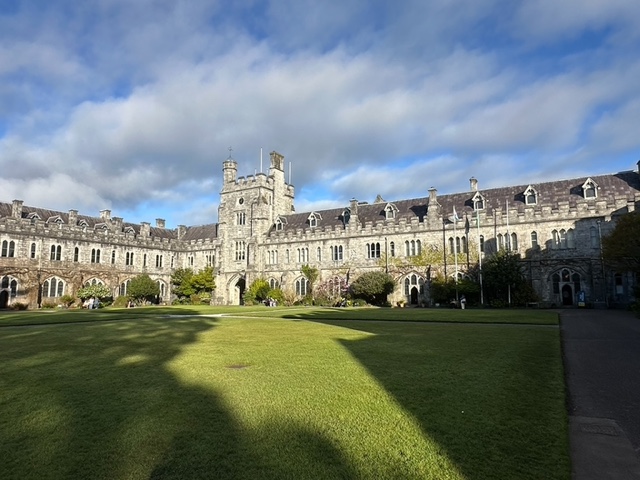
On Tuesday 31 March 2026, Dora Allman Hall at The Hub in University College Cork hosted “Breathing Better, Learning Better: How the Classroom Air Affects Children’s Health and Education,” a full-day interdisciplinary workshop that drew teachers, parents, school leaders, clinicians, researchers and advocates into the same room to tackle one of the most underappreciated public health issues facing children today: the air they breathe while they learn.
The seminar was convened by Dr Asit Kumar Mishra, Research Fellow with the School of Public Health at UCC and guest researcher with the Department of Environmental and Resource Engineering at the Technical University of Denmark (DTU).
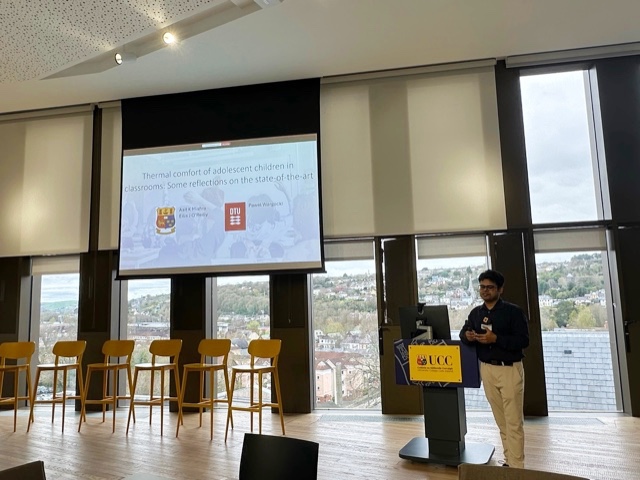
Dr Mishra has been one of the most articulate and persistent voices on classroom air quality in Ireland, leading the INSIDE-AIR project, a Marie Skłodowska-Curie funded programme developing sustainable indoor-air management systems for school classrooms across different building archetypes. His ability to convene this particular mix of expertise, public health, building science, atmospheric chemistry, clinical medicine and parent-led advocacy, in one room and for an entire day, was itself one of the standout achievements of the event.
An interdisciplinary line-up for classroom air quality
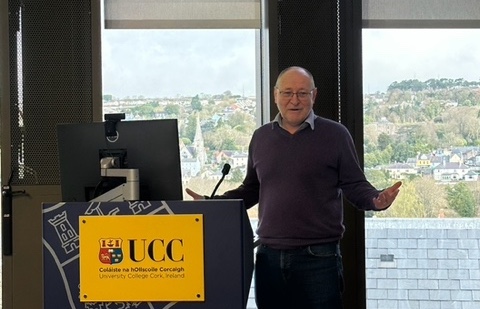
The opening address was delivered by Prof John Wenger of UCC’s School of Chemistry and the Centre for Research into Atmospheric Chemistry (CRAC), who set the tone for a day that resisted easy disciplinary silos.
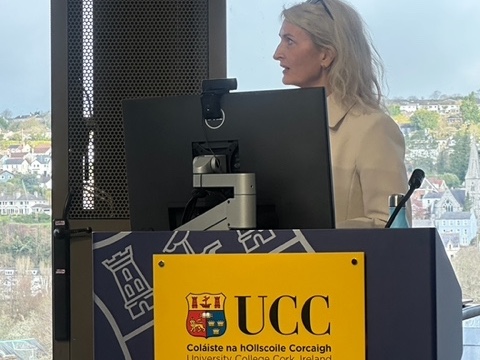
The first invited speaker was Dr Ciara Steele, an Inishowen-based GP and co-founder of Clean Air Advocacy Ireland. Dr Steele has been doing important work bringing clean air interventions, including HEPA filtration and CO2 monitoring, into Donegal classrooms, most recently at Scoil Naomh Bríd in Muff. Her presentation grounded the day in the lived clinical reality faced by families and primary care doctors and made a compelling case for why GPs need to be part of this conversation.
Other speakers included:
- Dr James McGrath, Assistant Professor in the Department of Physics at Maynooth University, whose research focuses on indoor environmental quality, ventilation and aerosol science
- Dr Liz Coleman, University of Galway (School of Natural Sciences, Physics)
- Ruth Brooker, founder of the Bristol-based not-for-profit Clean Air for Kids and a tireless campaigner who has been installing HEPA filtration in UK classrooms and lobbying for national-level action
- Prof Ella Arensman, School of Public Health, UCC
- Sinead O’Brien, Co-founder Clean Air Advocacy Ireland (CAAI)
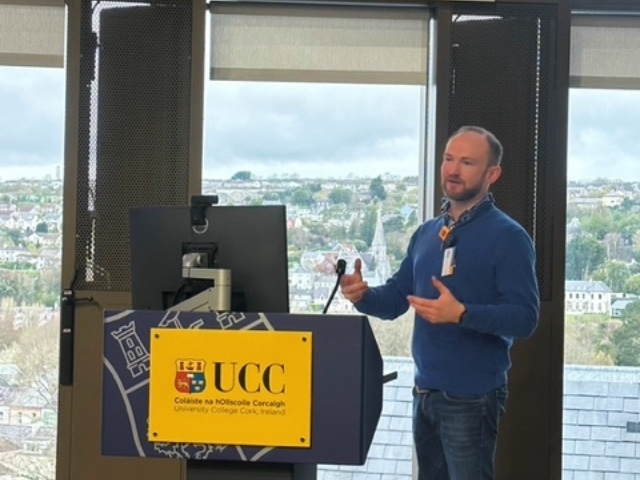
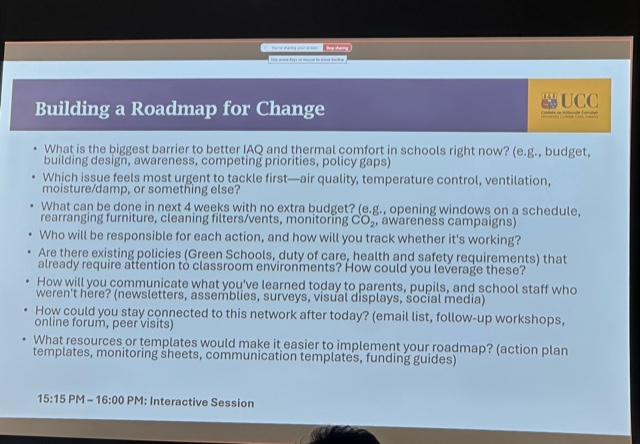
The day was structured around a keynote, small-group discussions, a hands-on practical workshop session, a panel discussion with researchers and teachers, a networking lunch, and an action planning session designed to translate the conversation into next steps.
Dr John McKeon’s keynote: from the parent’s question to the systemic answer
Speaking on behalf of Airmid HealthGroup and the wider iAIR Group, Dr McKeon opened with the question every clinician working in this space comes back to: if your child was just diagnosed with asthma or allergies, what would you do, and, more importantly, who can you trust?
That question framed a wider conversation about the trust gap parents face. Terms like “hypoallergenic,” “non-allergenic” and “doctor recommended” remain largely unregulated in the marketplace, even though they shape billions of dollars of purchasing decisions every year. Dr McKeon walked the audience through the science-based response that he and colleagues have built over more than two decades, most notably the Asthma & Allergy Friendly® Certification Program, the joint initiative of Allergy Standards Limited (ASL) and the Asthma and Allergy Foundation of America (AAFA), and the contract research capability at Airmid that underpins much of the testing work.
Key themes from the keynote included:
- The scale of the problem. In the United States alone, 106 million Americans live with asthma and allergies, conditions heavily influenced by what we breathe indoors. People spend roughly 90% of their lives inside buildings, and indoor air can be many times more polluted than outdoor air.
- The spending paradox. Around 85% of US healthcare expenditure (close to $4 trillion a year) is directed at access to treatment, yet environment and behaviour together account for roughly 70% of what actually influences health outcomes. US life expectancy has stalled, and in some years gone backwards, despite that spend.
- The shifts driving the air-aware paradigm. Dr McKeon outlined five fundamental shifts converging on indoor air right now: the climate agenda and outdoor air shift, the post-pandemic shift, the technology shift, the policy shift, and the culture shift on wellbeing.
- Airmid HealthGroup’s research role. Airmid operates a 20,000 square foot biomedical contract research facility across two buildings on the City West Life Science Campus, specialising in aerobiology and infection control. The team runs GLP-based projects, holds ISO 17025 accreditation, operates aerobiology and infection control chambers and Allergen Exposure Chambers (AECs), and conducts Biosafety Level 2 testing including flu virus, bacteria and mould work. The facility is currently contributing to the ARPA-H BREATHE project and is investing in digital twins, computational fluid dynamics and AI-driven modelling to enhance real-time chamber testing.
- From IAQ to IEQ. Dr McKeon mapped the journey from a baseline focus on safety (structural codes, fire) through indoor air pollutants and sickness, towards indoor environmental quality (IEQ) and buildings that are restorative, regenerative and “Blue Zone” optimised for health and wellbeing.
- Joining the dots: Doing, Sensing, Feeling. His closing framework asked the audience to connect three things that are too often treated separately: the choices we make in building design, products and operations (doing); the building’s impact on the indoor environment (sensing); and the impact on the person inside that environment (feeling).
- The Global Commission on Healthy Indoor Air. Launched at the United Nations in September 2025, the Commission brings together nearly 170 global leaders from more than 30 countries. Dr McKeon serves on the Commission and continues to work with that coalition on translating scientific consensus into national and international policy.
A familiar name, in an unfamiliar place
One small but telling moment of the day, for Dr McKeon at least, was spotting the name of Professor Pawel Wargocki on one of the slides. Prof Wargocki, based at DTU, is one of the world’s foremost researchers on classroom CO2, ventilation rates and student cognitive performance. As Dr McKeon noted afterwards,
“Normally I’m on the other side of the Atlantic at an ASHRAE event when Pawel’s name comes up on a slide, so seeing it referenced in Cork was a reminder that the indoor air conversation has genuinely gone global. Given Asit’s research links with DTU it makes perfect sense, but it was a welcome surprise all the same.”
The takeaway on classroom air quality: more rooms like this one
In his post-event reflection on LinkedIn, Dr Mishra captured what many in the room were feeling: there is “immense passion and commitment across multiple sectors to ensure healthy breathing spaces for our children,” and turning that passion into measurable change will require more forums of exactly this kind, places where researchers, educators, policymakers and advocates can interact, exchange ideas and build practical solutions for classroom air quality together.
For Airmid, classroom air quality sits firmly inside our research remit. Few facilities globally are equipped to replicate real-world indoor environments under controlled, regulated conditions, and the team is well placed to support the next generation of product testing, research and policy work that healthier classrooms will require.
Our thanks to Dr Mishra and UCC for the invitation, to fellow speakers for an exceptional day of exchange, and to the parents, teachers and school leaders whose questions shaped the action planning session. We look forward to continuing this hugely important conversation on classroom air quality.
Related Tests and Services at Airmid
Advisory Services for Indoor Air Quality and Product Validation
ISO/IEC 17025 Accredited Allergen Laboratory Services
Aerobiology Microbiology Laboratory Services
Related Blogs and Case Studies
HEALTH in BUILDINGS – HYGEIA 2026
Measuring What Matters: Aerobiology and Indoor Environmental Quality Testing
Advancing “Healthy Spaces for All”: Insights from Greenbuild 2025
Related External Links
Asthma & Allergy Friendly® Certification Program

