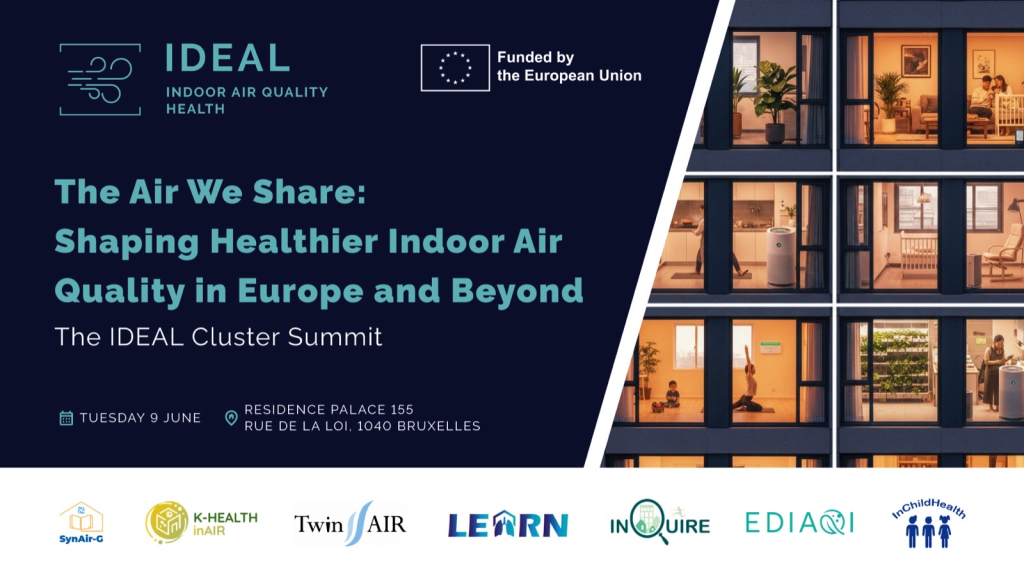
Last week, Airmid CMO Dr. John McKeon travelled to Brussels for a landmark moment in European indoor air quality policy: the IDEAL Cluster Summit, “The Air We Share: Shaping Healthier Indoor Air Quality in Europe and Beyond.”
The Summit brought together more than 120 organisations, including policymakers, researchers, industry leaders, public authorities and civil society, to mark the conclusion of four years of collaboration across seven Horizon Europe-funded research projects. With over €50 million in collective investment, the IDEAL Cluster has produced one of the most comprehensive bodies of evidence on indoor air quality (IAQ) and human health ever assembled at European level.
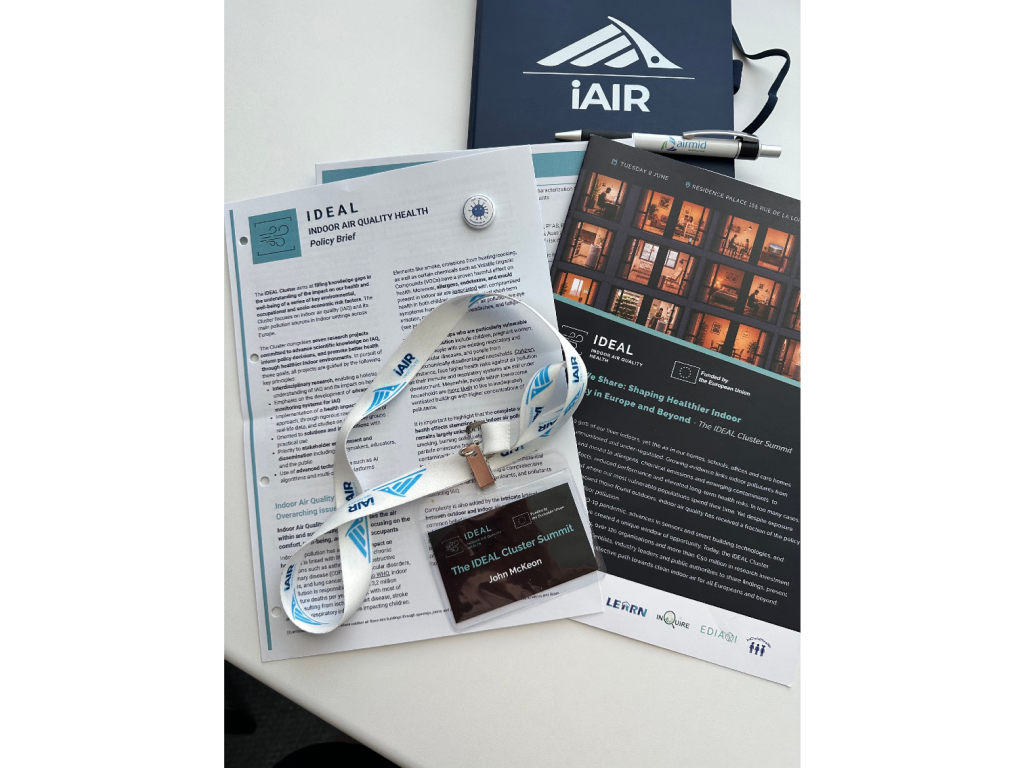
A Panel on Policy and Evidence
Dr. McKeon joined an expert panel alongside Professor Pawel Wargocki of the Technical University of Denmark, one of the world’s foremost researchers on indoor environment and cognitive performance, and Rita Araujo, a researcher and policy specialist in the indoor environment field. The panel explored how the scientific evidence generated by the IDEAL Cluster can be translated into meaningful, lasting policy change across Europe.
The invitation came from Alex Borg of EDIAQ, following Dr. McKeon’s participation in a webinar earlier in the year. It was a natural fit: Airmid’s work at the intersection of aerobiology, environmental science and real-world health outcomes places it at the heart of the questions the IDEAL Cluster has spent years working to answer.
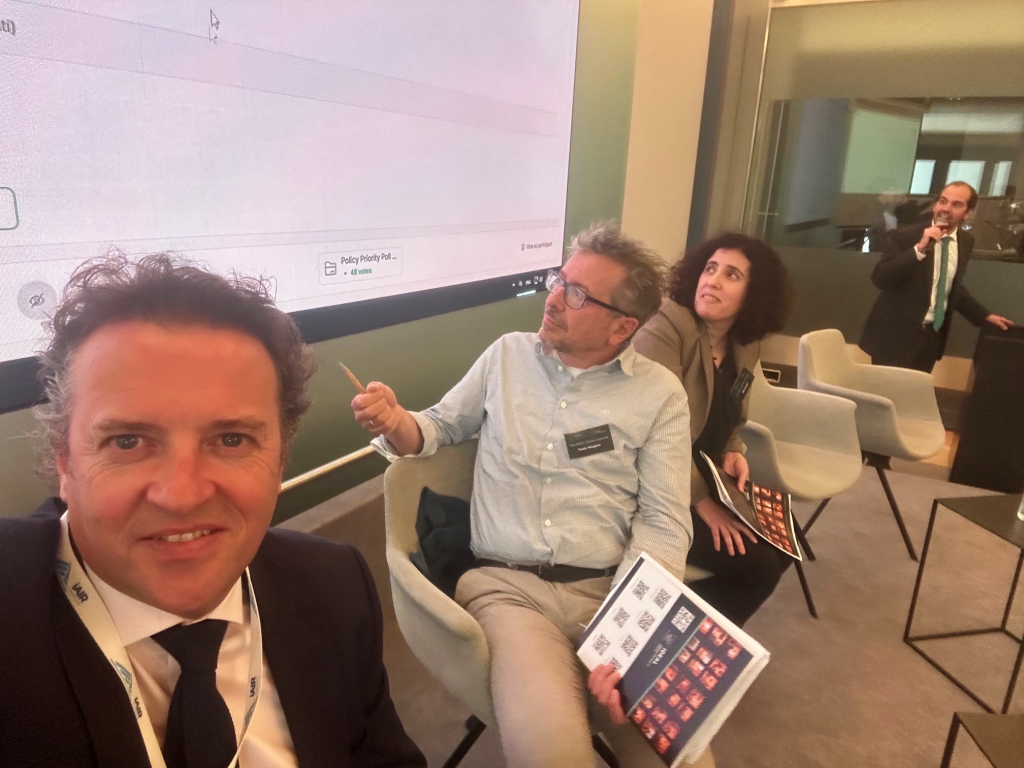
Seven Key Messages from the Summit
The Summit distilled four years of research into seven calls to action:
People spend up to 90% of their lives indoors, and poor IAQ affects health, wellbeing and cognitive performance, with children, the elderly and those with existing health conditions most at risk. Europe now has the scientific tools and evidence base to act, but legislative gaps remain, and closing them requires translating robust science into comprehensive policy. The health dimension must stay central, particularly the respiratory and cardiovascular impacts on vulnerable populations. And critically: the time for action is now.
As EU Director Maria Pilar Aguar Fernandez noted, researchers are agents of change, generating the knowledge, innovation and evidence that improve lives, support policymaking and help create healthier societies.
From the Summit to the Parliament
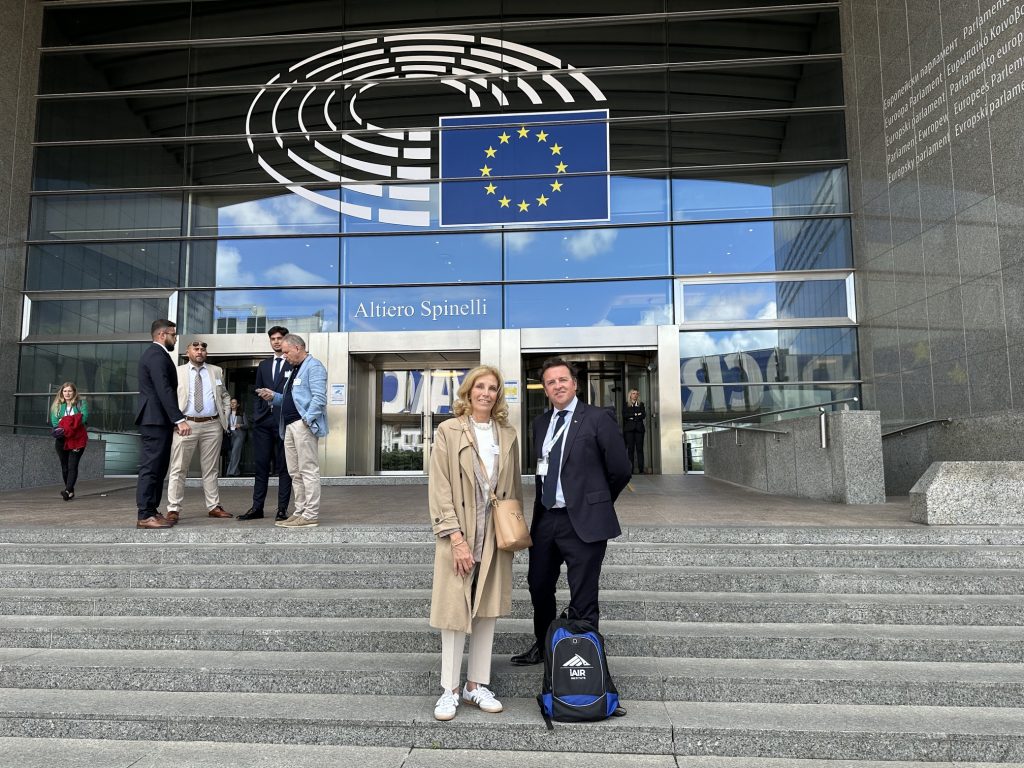
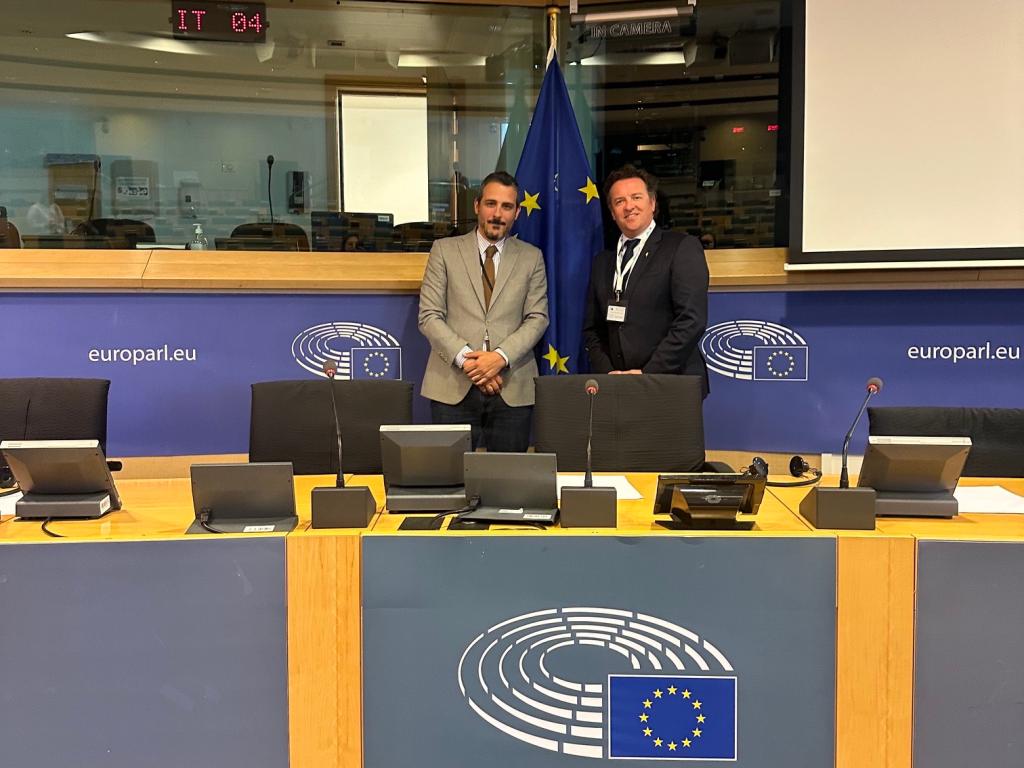
The Brussels visit extended beyond the Summit itself. Dr. McKeon was invited by Panagiotis-Minos Chaslaridis to attend the SynAir-G key findings event at the European Parliament, hosted by MEP Aurelijus Veryga. SynAir-G is a Horizon Europe-funded project focused on the synergistic effects of indoor air pollutants on childhood health and wellbeing. Bringing its research findings directly to EU decision-makers, the event was a clear example of science meeting policy in real time.
Why This Matters for Airmid
The questions at the heart of the IDEAL Cluster, specifically how indoor pollutants affect health, which populations are most vulnerable, and how evidence can drive regulatory change, are questions Airmid has been working to answer through its laboratory science and collaborative research programmes. Participation in the Summit, and in the SynAir-G Parliament event, reflects Airmid’s ongoing commitment to being part of the European research community shaping the future of indoor air quality standards.
The legacy of the IDEAL Cluster is only just beginning. Airmid looks forward to continuing to contribute to this work.
What Emerging EU Indoor Air Quality Standards Mean for Manufacturers
The research assembled by the IDEAL Cluster was never intended to stay in academic journals. Its explicit purpose is to inform EU policy — to equip regulators with the most comprehensive scientific evidence on indoor air quality and human health ever produced at European level, and to turn that evidence into lasting legislative change. That process is already underway.
For manufacturers of air cleaning devices, HVAC systems, antimicrobial technologies, and consumer health products, this has practical implications now. Regulatory expectations around indoor air quality performance claims are hardening across Europe. Third-party, independent, accredited test data — generated under controlled, real-world conditions — is increasingly what regulators, certification bodies, retailers, and institutional procurement teams require before a product reaches market.
Airmid’s ISO/IEC 17025-accredited, GLP-compliant testing facilities are built precisely for this work. Whether you need to validate product performance against existing standards, generate data for a novel technology that sits outside current norms, or prepare a scientific dossier for an EU regulatory submission, our team will design the right testing programme from the ground up. The conversations happening in Brussels are setting the direction of travel. The time to prepare your product data is now.
Is Your Product Ready for Emerging EU Indoor Air Quality Standards?
Speak to the Airmid team about independent testing, claims substantiation, and regulatory support for indoor air quality technologies.
Related Tests and Services at Airmid
- Advisory Services for Indoor Air Quality and Product Validation
- Services for Regulatory Affairs Professionals Focusing on Infectious Aerosol Exposure
- Surface and Aerobiology Testing Services
Related Blogs
- Airmid Healthgroup at Indoor Air 2026: Dr. John Ryan Presents HVAC Duct Cleaning Research in Singapore
- iAIR Institute Scientific Leadership Forum: Indoor Air Quality, Public Health and the Future of Healthy Buildings
- Airmid Healthgroup at EAACI 2026: Advancing Allergen Testing Research on the World Stage