
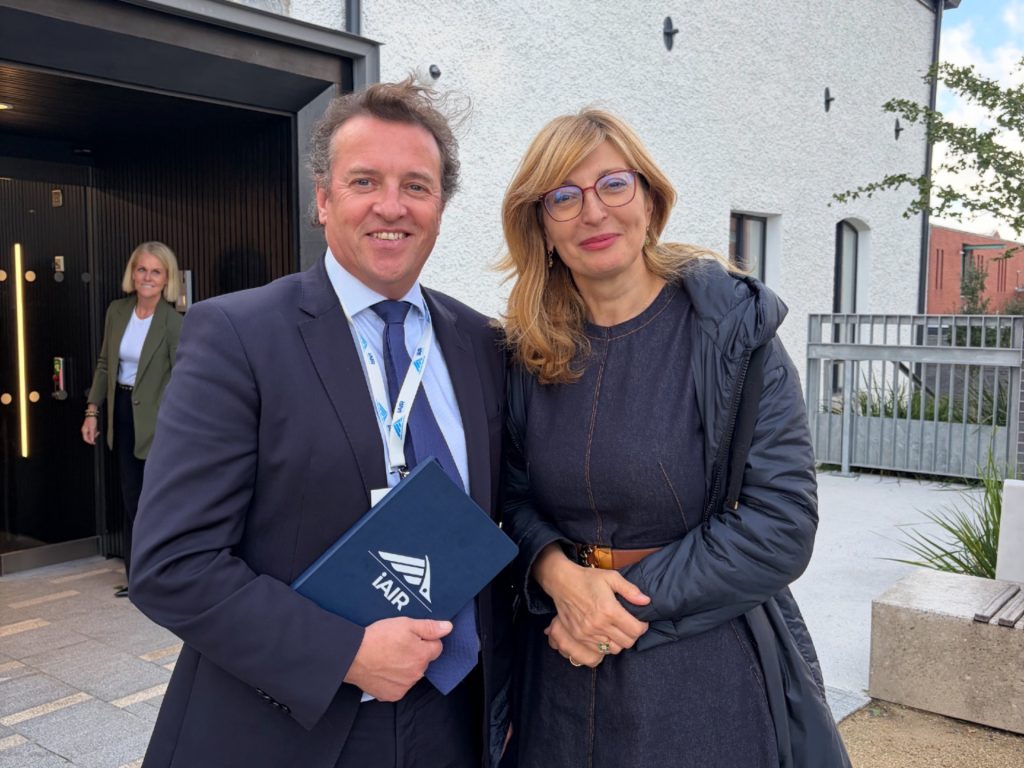
Reflections on meeting European Commissioner Ekaterina Zaharieva at Trinity Innovation Hub, 13 October 2026
Today, I had the pleasure of meeting Ekaterina Zaharieva, European Commissioner for Startups, Research and Innovation, during her visit to Trinity College Dublin’s Innovation Hub at Trinity East. The Commissioner met students from Trinity’s entrepreneurial community before joining Provost Professor Linda Doyle for a fireside conversation about research, innovation and the opportunities facing Europe.
As an Entrepreneur in Residence at Trinity, with a particular interest in healthcare innovation and medical technology, it was a welcome opportunity to reflect on a question that has followed me through much of my career:
How do we turn excellent science into innovations that genuinely improve people’s lives? It’s a question that has been particularly relevant to my travels and conversations across Europe this year.
Geneva, Brussels and Dublin: Three perspectives on one challenge
Earlier this year, I was in Geneva, where discussions around the World Health Assembly highlighted the importance of connecting scientific evidence, public health and international cooperation.
One of my reflections from that visit was that the future of healthcare will not be shaped exclusively in hospitals, medical schools or research laboratories. It will also be shaped through engineering, technology, standards development, public policy and collaboration across disciplines.
In Brussels, engaging with European research and policy initiatives, I encountered another dimension of the same challenge. Europe has extraordinary scientific capabilities. But generating evidence and producing excellent research papers is only part of the journey. We must translate that knowledge into practical guidance, effective policy, investable technologies and, ultimately, real-world implementation.
Geneva reminded me why scientific innovation matters. Brussels highlighted the importance of policy and implementation. Dublin brought the conversation back to the people and places where new ideas become businesses.
Why physical spaces for innovation matter more than ever
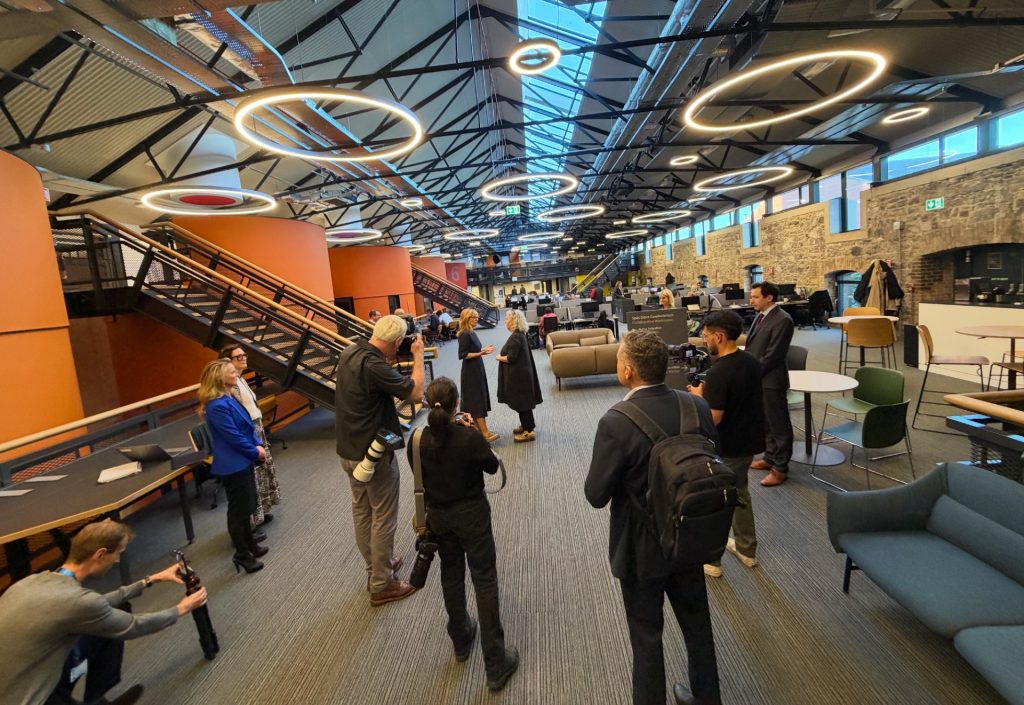
One of the striking features of the Trinity Innovation Hub is the importance it places on bringing people together. At a time when artificial intelligence is transforming research and virtual meetings can connect us with colleagues anywhere in the world, it might seem counterintuitive to invest in physical innovation spaces.
I would argue the opposite.
Innovation often happens at the intersections of disciplines, where a clinician encounters an engineer, a scientist meets an entrepreneur, or a researcher has an unexpected conversation with someone who recognises a commercial application for their discovery. These interactions are difficult to manufacture, and they don’t always happen through scheduled meetings or structured programmes.
They happen over coffee, in corridors, during informal discussions and through the relationships that develop when people share a common environment. That is why facilities such as Trinity Innovation Hub are so important. They provide more than desks and meeting rooms. They create the conditions for a community of innovation to develop.
We can collaborate virtually across continents, but there is still something irreplaceable about bringing curious, ambitious people together in the same room.
The next generation of European entrepreneurs
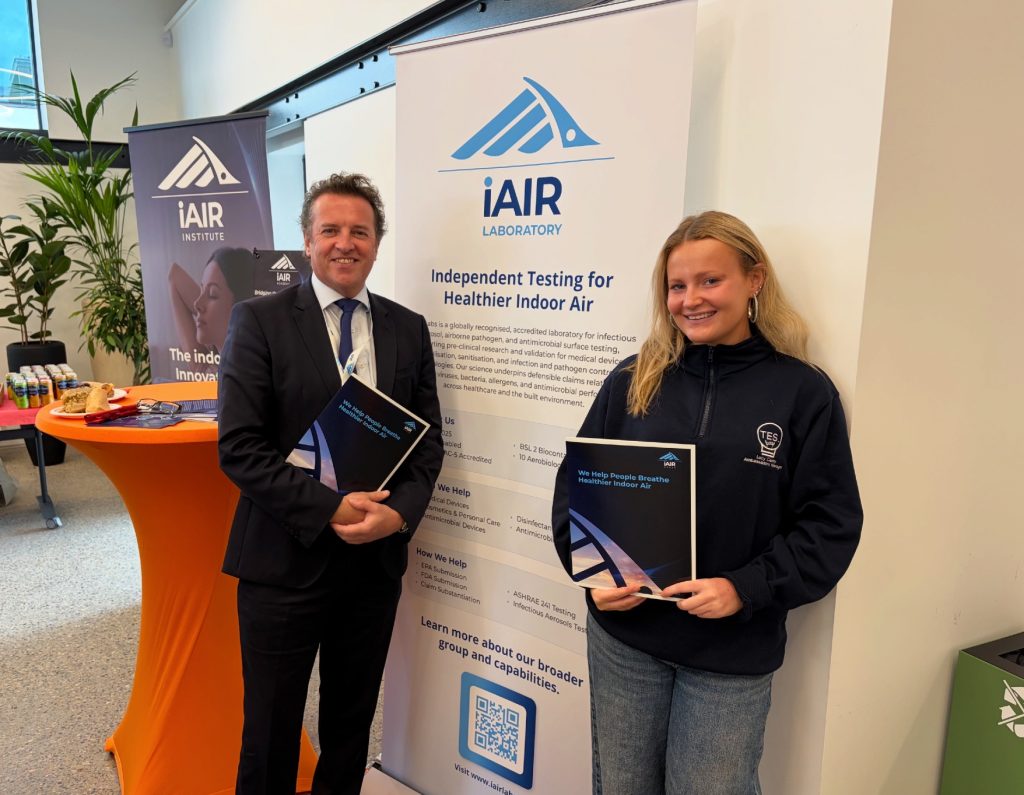
It was particularly encouraging to see Commissioner Zaharieva engaging with students from Trinity’s entrepreneurial community. There is something powerful about seeing the next generation of founders interact directly with the people shaping Europe’s research and innovation agenda.
Europe’s ambition to strengthen its startup and scaleup ecosystem is increasingly important, particularly in sectors such as life sciences, healthcare, advanced manufacturing and deep technology.
We have world-class universities, exceptional researchers and internationally competitive scientific institutions. But we must also make it easier for young entrepreneurs to access infrastructure, attract investment, navigate regulation and build companies capable of competing globally. In medical innovation, these challenges can be especially demanding.
A promising healthcare technology needs more than an exciting idea. It often requires rigorous scientific validation, clinical or real-world evidence, regulatory planning, manufacturing capability and substantial patient capital before it can achieve commercial success. Supporting the next generation of entrepreneurs means understanding that journey and creating an ecosystem capable of supporting it.
From treating illness to preventing it
This theme also resonates strongly with my own professional journey. I began my career as a medical doctor, working in emergency medicine, where the focus was necessarily on diagnosing and treating illness. Over time, my interests moved increasingly towards prevention, public health and the role of the environments in which we live and work.
Today, through iAIR Group, including our independent testing laboratory and research activities, we work at the intersection of microbiology, aerobiology, engineering, standards and health technology. Our mission is rooted in a straightforward ambition: helping to create a world without building-related illness. That means supporting innovators who are developing technologies to improve indoor air quality, reduce exposure to airborne pathogens and allergens, and contribute to healthier indoor environments.
In many ways, this work illustrates the wider challenge facing European medical innovation. Scientific discovery is essential, but so is the ability to demonstrate that a technology works, establish trust in its performance and translate that evidence into adoption at scale. A medical innovation only achieves its full value when it moves beyond the laboratory and makes a measurable difference to human health.
Europe’s opportunity: From scientific excellence to global impact
Commissioner Zaharieva’s portfolio sits at the centre of some of Europe’s most important strategic questions. How do we retain exceptional scientific talent? How do we encourage investment in high-potential technologies? How do we reduce barriers to scaling innovative businesses across European markets? And how do we ensure that Europe’s leadership in research translates into companies, products and services capable of making a difference worldwide?
Ireland has an important role to play in answering those questions. Our strengths in pharmaceuticals, medical devices, biotechnology, engineering and digital technology provide a powerful foundation for healthcare innovation. But the next opportunity lies increasingly in the spaces between these established sectors.
That is where new technologies, new collaborations and new business models can emerge. As entrepreneurs, researchers, clinicians and policymakers, we have an opportunity to build stronger bridges between scientific discovery, technical validation, investment and commercialisation. And as educators and mentors, we have a responsibility to ensure the next generation has the confidence, ambition and practical support to make that journey.
People, place and purpose
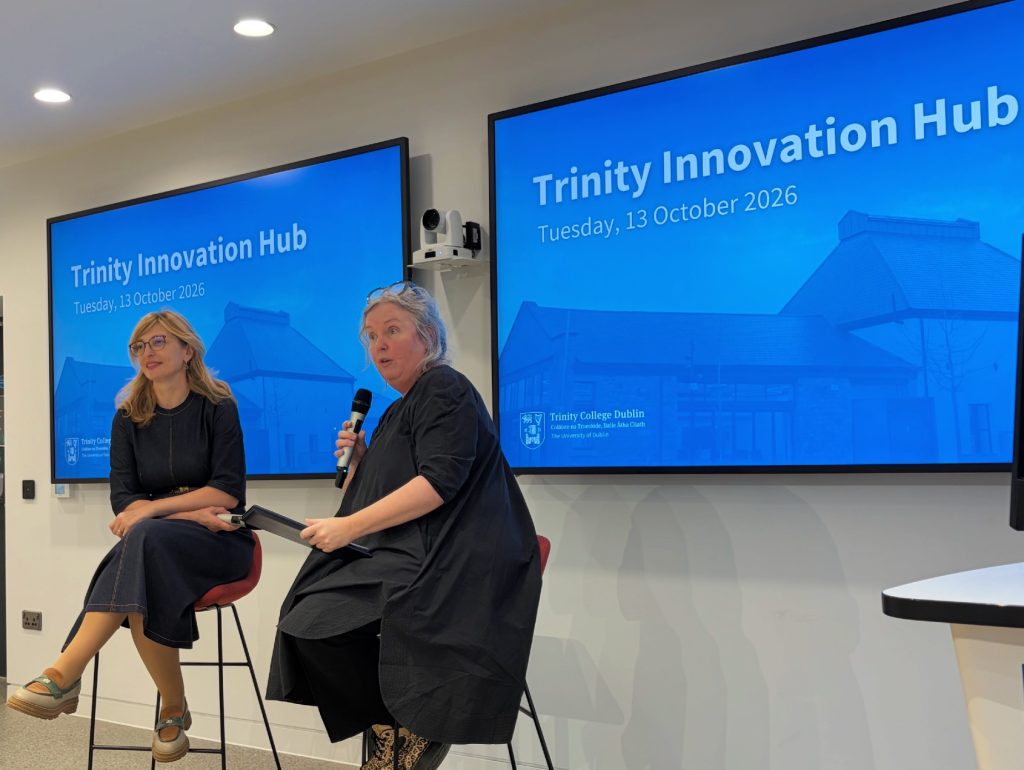
My thanks to Trinity College Dublin, Provost Linda Doyle, and the team at Trinity Innovation Hub for bringing together such an interesting community and creating the opportunity to engage with Commissioner Zaharieva. It was encouraging to see Europe’s innovation agenda brought into a setting where the entrepreneurs of tomorrow are already developing their ideas.
Reflecting on Geneva, Brussels and now Dublin, I keep returning to three essential ingredients for successful innovation:
People, place and purpose.
People with different experiences and expertise. Places that encourage collaboration and experimentation. And a shared purpose that extends beyond scientific discovery or commercial success.
For those of us working in medical and healthcare innovation, that purpose should always return to improving human health. Europe has the scientific talent. It has the research institutions. And it has a new generation of ambitious entrepreneurs. Our challenge is to bring these strengths together and turn potential into impact.
Because the true measure of innovation is not simply what we discover, but what we improve.
Related blog posts
- Airmid at the IDEAL Cluster Summit: Bringing Indoor Air Science to Brussels: Dr John McKeon joins an expert panel in Brussels as four years of EU-funded indoor air quality research comes to a close.
- Reflections from the Irish Medtech Association AGM 2026: Why airborne infection control is becoming central to medtech, and why independent validation is key to bringing new technologies to market.
- From Lab Bench to Loyalty: The People Powering Health-Focused Innovation: How independent test data supports a health-focused product from formulation through to the shelf and beyond.
Related testing and services
- Advisory Services: Support for med-tech and health-tech innovators, from R&D and regulatory positioning to independent claims verification.
- Infection Control and Antimicrobial Technologies Testing Services: ISO 17025-accredited, GLP-compliant testing to support EPA, FDA, Health Canada and CE marking submissions.
- Surface and Aerobiology Testing Services: Contract testing for airborne pathogens, surface efficacy, allergens and mould across our virology, microbiology, mycology and allergen laboratories.


