
Airborne Infection Control Is Becoming Central to the Future of Medical Technology
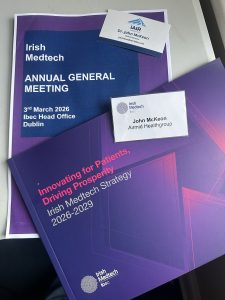
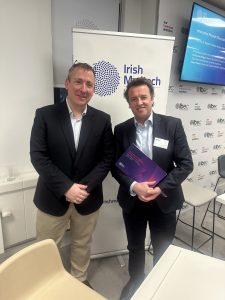
Members of the Irish medical technology community gathered on Tuesday evening, March 3rd, for the Irish Medtech Association AGM and Members’ Evening 2026, held at the Ibec headquarters on Lower Baggot Street in Dublin.

The event brought together leaders from across Ireland’s vibrant #MedTech ecosystem to review the sector’s performance, discuss emerging policy developments, and strengthen collaboration between innovators, manufacturers, researchers, and regulators.
For iAIR Labs, the aerobiology and indoor environmental health laboratory within the iAIR Group, the evening provided an excellent opportunity to engage with colleagues from across the medtech sector and reflect on the growing intersection between medical technologies, infection control, and indoor environmental quality.
Ireland: A Global Centre of
Ireland has established itself as one of the world’s leading centres for medical technology innovation and manufacturing. Today, more than 450 medtech companies operate across the country, employing over 45,000 people and exporting more than €13 billion in medical technologies annually.
Organisations such as the Irish Medtech Association play a central role in supporting this ecosystem by fostering collaboration between industry, government, and research institutions.
Events like the AGM provide an important forum for members to:
-
Review sector performance and future outlook
-
Discuss regulatory and innovation policy
-
Strengthen connections across the medtech ecosystem
-
Share insights on emerging clinical and technological challenges
For organisations like iAIR Labs, these conversations are particularly relevant as many of the emerging challenges in healthcare increasingly involve environmental exposure pathways, airborne pathogens, and indoor environmental quality in healthcare settings.
The Growing Importance of Airborne Infection Control
The COVID-19 pandemic accelerated global awareness of the role of airborne transmission of infectious pathogens in healthcare and indoor environments.
As a result, a growing number of medtech innovators are developing technologies designed to improve infection control and environmental safety.
These technologies include:
-
Air purification and disinfection systems
-
Environmental monitoring technologies
-
Antimicrobial surfaces and materials
-
Advanced filtration and ventilation technologies
However, for these innovations to reach the market and gain trust from clinicians, regulators, and consumers, robust scientific validation is essential.
This is where specialised aerobiology testing facilities such as iAIR Labs play an important role.
Supporting Medtech Innovation Through Scientific Validation
At iAIR Labs, our work focuses on evaluating technologies designed to improve indoor environmental health. Using controlled environmental chambers and internationally recognised testing protocols, we support companies developing solutions to reduce airborne pathogens and environmental contaminants.
Typical testing programmes may involve:
-
Aerosolising viral or bacterial pathogens in controlled test chambers
-
Measuring microbial reduction or inactivation performance
-
Evaluating equivalent clean air contribution
-
Assessing safety and potential secondary by-products
These capabilities support innovators developing technologies for use in:
-
Hospitals and healthcare environments
-
Cleanrooms and pharmaceutical manufacturing
-
Public buildings and transportation systems
-
Consumer health and wellness products
As the medtech sector continues to expand into environmental health technologies, collaboration between product developers and independent scientific laboratories becomes increasingly important.
Navigating Regulatory Pathways for Environmental Health Technologies
For many innovators, the challenge is not only demonstrating that a technology works, but ensuring that performance claims meet regulatory expectations in global markets.
Our team works with innovators developing technologies related to indoor environmental health, infection control, and antimicrobial materials, advising on how laboratory data can support regulatory submissions and product claims under frameworks such as:
-
U.S. Environmental Protection Agency (EPA) guidance
-
U.S. Food and Drug Administration (FDA) medical device pathways
-
European Union Medical Device Regulation (EU MDR)
-
International standards and certification programs
Companies marketing technologies with health-related performance claims must ensure those claims are supported by appropriate scientific evidence.
The U.S. Federal Trade Commission provides detailed guidance on this topic in its document:
Health Products Compliance Guidance
This guidance highlights the importance of competent and reliable scientific evidence when making claims about health outcomes or product performance.
For companies developing technologies intended to reduce airborne pathogens, improve indoor air quality, or mitigate environmental exposure risks, aligning laboratory testing, study design, and product claims with regulatory expectations from the outset is essential.
The Role of Industry Collaboration
The Irish Medtech Association continues to play an important role in supporting collaboration across the sector.
During the event, attendees also discussed the newly released Irish Medtech Strategy 2026-2029, which focuses on strengthening Ireland’s position as a global leader in medtech innovation while continuing to drive patient impact and economic growth.
For organisations like iAIR Labs, participation in these conversations reinforces an important reality:
The next generation of medical technologies will increasingly intersect with indoor environmental systems, airborne exposure pathways, and infection control technologies.
Addressing these challenges requires collaboration between:
-
Medtech innovators
-
Aerobiology researchers
-
Public health scientists
-
Building engineers
-
Regulators and standards bodies
Events like the Irish Medtech AGM provide an important platform for these conversations.
Looking Ahead
As healthcare systems place greater emphasis on infection prevention and environmental health, the role of technologies that address airborne risks will continue to expand.
Ireland’s medtech ecosystem is uniquely positioned to lead in this area, combining world-class manufacturing, engineering expertise, and a growing network of scientific validation partners.
At iAIR Labs, we look forward to continuing to support medtech innovators developing the next generation of technologies designed to make indoor environments safer and healthier.
Author
Dr John McKeon
CEO – iAIR Group / Airmid Healthgroup
Dr John McKeon is a building engineer and indoor environmental health specialist. He leads the iAIR Group, including iAIR Labs (Airmid Healthgroup), a global contract research laboratory specialising in aerobiology, airborne pathogen testing, and environmental exposure science for medical technologies and healthy building products.
Related iAIR Labs Services
Testing to ASHRAE 241 Standard
Aerobiology Chamber Testing for Infection Control Technologies
HVAC Filter Performance Testing for Healthcare Applications
Antimicrobial Surface and Material Performance Testing
Helpful Links


