

 |
 |
Overview
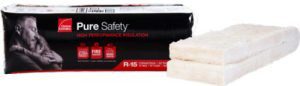
Owens Corning, a global leader in insulation products, partnered with Airmid Healthgroup to assess and validate the health and safety performance of their innovative Pure Safety™ high-performance insulation. Through rigorous testing and research, the product became the first insulation certified by the Asthma and Allergy Foundation of America (AAFA), meeting stringent standards for indoor air quality and mold resistance.
Background
About Owens Corning:
Owens Corning is a market leader in building materials, known for innovation in insulation and roofing solutions. Their commitment to product performance and environmental sustainability has established them as an industry pioneer.
About Airmid Healthgroup:
Airmid specializes in scientifically validating health claims for products in the built environment. With expertise in environmental testing and a focus on allergens, VOCs, and mold, Airmid helps clients like Owens Corning ensure their products promote healthier indoor environments.
The Challenge
Fiberglass insulation can potentially impact indoor air quality by releasing:
- Volatile Organic Compounds (VOCs): Emissions from materials used in insulation can contribute to poor air quality.
- Particulates and Fibers: Released during installation or disturbances, these can affect respiratory health.
- Mold Growth Risks: Insulation materials can act as a reservoir for mold under certain conditions.
Owens Corning sought to address these concerns comprehensively to ensure their Pure Safety™ insulation would meet the highest standards for indoor air quality, performance, and safety.
Goals
- Achieve certification from the Asthma and Allergy Foundation of America (AAFA).
- Demonstrate that Pure Safety™ insulation promotes healthy indoor air quality.
- Differentiate the product in a competitive insulation market with independently validated health claims.
Solution/Approach
Airmid Healthgroup designed a comprehensive testing protocol to evaluate the performance and safety of Pure Safety™ insulation. This approach included:
- VOC Emissions Testing:
- The product underwent the ASTM D5116 Small Chamber Test and California Specification 01350 Test Methods to quantify VOC emissions.
- Results were benchmarked against certification thresholds to ensure compliance with strict indoor air quality standards.
- Environmental Test Chamber Simulations:
- Airmid replicated typical insulation installation within stud partition cavity walls under controlled conditions.
- Airborne dust, particle, and fiber levels were measured during installation and after simulated disturbances, providing real-world insights into potential air quality impacts.
- Mold Resistance Testing:
- Using a method based on ASTM C1338 (2008): Standard Test Method for Determining Fungi Resistance of Insulation Materials and Facings, Airmid demonstrated that Pure Safety™ insulation did not support mold growth under humid conditions.
This robust methodology ensured a comprehensive evaluation of the product’s health impact and performance.
Implementation Process
Step 1: Material Review
- Owens Corning provided a detailed breakdown of the product’s constituents for assessment.
- Initial reviews ensured no hazardous materials were present that could compromise air quality.
Step 2: VOC Emissions Testing
- The product was subjected to small chamber and large chamber tests to quantify VOC emissions.
- Measurements were compared against certification thresholds to ensure compliance with health standards.
Step 3: Installation and Disturbance Simulation
- In Airmid’s environmental test chambers, the product was installed within stud partition cavity walls to simulate real-world usage.
- Air quality tests measured dust, particle, and fiber levels during and after installation as well as during simulated disturbances.
Step 4: Mold Resistance Evaluation
- Samples were exposed to conditions conducive to mold growth and monitored for any fungal development.
- The product passed the ASTM C1338 (2008) test, confirming that it did not support mold growth.
Step 5: Reporting and Certification Support
- Airmid provided Owens Corning with detailed reports to support their certification application with AAFA.
Key Results
- VOC Compliance: Testing confirmed VOC emissions were well within the certification thresholds.
- Low Particle Release: Airborne particles, dust, and fibers during installation and room disturbances were minimal, ensuring better indoor air quality.
- Mold Resistance: The product did not support mold growth under tested conditions, validating its durability and safety.
- First-of-Its-Kind Certification: Pure Safety™ insulation became the first insulation product certified by AAFA, a significant milestone in the industry.
Impact
Consumer Confidence: Certification from AAFA reinforced Owens Corning’s reputation for creating products that contribute to healthier living environments.
Market Leadership: Pure Safety™ insulation set a new benchmark for high-performance insulation, offering consumers a safe and reliable option for their homes.
Health Benefits: The product contributes to improved indoor air quality, aligning with increasing consumer demand for health-conscious building materials.
Lessons Learned
- Comprehensive Testing Builds Trust: Rigorous testing across multiple dimensions—VOC emissions, particle release, and mold resistance—provides confidence to both consumers and certifying bodies.
- Independent Validation Differentiates Products: Third-party certification adds credibility and a competitive edge in crowded markets.
Conclusion
Owens Corning’s collaboration with Airmid Healthgroup highlights the importance of independent testing and certification in driving innovation and consumer trust. The success of Pure Safety™ insulation demonstrates how scientifically validated claims can differentiate products in competitive markets while promoting healthier indoor environments.
Contact Airmid Healthgroup
Are you looking to validate your product’s health and safety claims? Contact Airmid Healthgroup today to learn more about our testing and certification support services.
Related Testing:
ASTM C1338-19: Standard Test Method to Evaluate the Fungal Resistance of Insulation Materials