
Published: June 5, 2019
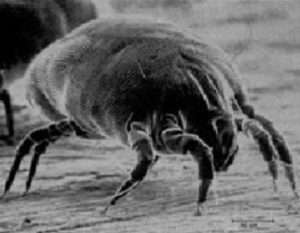 House dust mites are a major source of indoor allergens, contributing to conditions such as asthma, allergic rhinitis, and atopic dermatitis. In a groundbreaking study, researchers from Airmid Healthgroup and Maynooth University Department of Biology have successfully sequenced the genome of the European house dust mite (Dermatophagoides pteronyssinus), offering new insights into its allergen profile and potential strategies for managing mite-related allergies.
Unraveling the House Dust Mite Genome
The study, supervised by Professor Sean Doyle, was led by PhD researcher Rose Waldron, funded by the Irish Research Council Enterprise Partnership Scheme and Airmid Healthgroup. In collaboration with Dr. David Fitzpatrick’s Genome Evolution Laboratory at Maynooth University, the research team:
- Assembled and annotated the house dust mite genome, identifying 12,530 protein-coding genes.
- Predicted that 3% of these proteins could trigger house dust mite allergy in humans.
- Confirmed the presence of 37 known mite allergens that are known to cause severe allergic responses.
- Discovered over 1,000 “orphan” genes, unique to this species, with potential allergenic properties.
Dr. Fitzpatrick explains:
“Orphan genes are specific to a species and absent in closely related organisms. Some of these may be significant allergens.”
New Insights into House Dust Mite Allergy and Treatment
The research team developed an innovative protein mass spectrometry method to analyze dust samples. This revealed that orphan proteins are highly abundant, including enzymes that may play a role in dust mite growth and survival.
Dr. Natasha Gordon from Airmid Healthgroup highlights the significance of these findings:
“These data may have clinical applications in developing new allergen-specific tests and immunotherapies that mimic natural exposure. Airmid is excited by the potential impact of this research.”
Using AI to Target House Dust Mites
Leveraging machine learning and artificial intelligence, researchers identified seven desiccation resistance proteins that help mites survive in low-moisture environments like household dust.
PhD researcher Rose Waldron explains:
“The ability of mites to withstand dry conditions is due to specific resistance genes. Our study not only predicted their existence but also experimentally confirmed their function. This could lead to new strategies to control dust mite populations.”
Evolutionary Insights: Europe, Africa, and America
The availability of the European house dust mite genome allowed researchers to analyze its evolutionary relationships. The study found that:
- The European house dust mite is genetically closer to the African species (Euroglyphus maynei) than to its American counterpart (Dermatophagoides farinae).
These findings provide valuable information for allergen research on a global scale.
Access the Full Study
The study, titled “Proteome and allergenome of the European house dust mite (Dermatophagoides pteronyssinus)”, has been published in the peer-reviewed journal PLOS ONE and is freely available online.
Funding & Resources:
- Mass spectrometry facilities were supported by Science Foundation Ireland.
- Computational analysis was conducted using the DJEI/DES/SFI/HEA Irish Centre for High-End Computing (ICHEC).
Why This Matters for People with House Dust Mite Allergy
This study provides a new level of understanding of house dust mite allergens, paving the way for:
- More effective house dust mite allergy testing
- Better immunotherapy treatments
- Innovative strategies to reduce mite infestations
Stay updated with Airmid Healthgroup Blog for the latest breakthroughs in allergen science and indoor air quality research.
