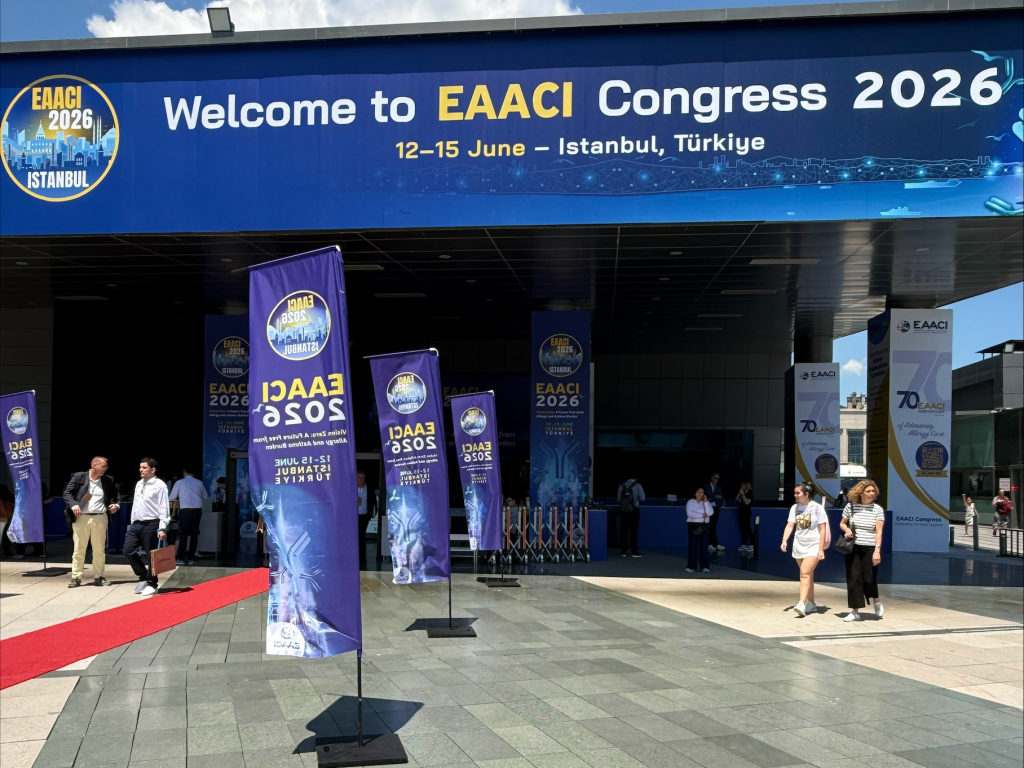
Last week I had the opportunity to represent Airmid Healthgroup at EAACI Congress 2026 in Istanbul, Türkiye. The congress ran from 12 to 15 June and brought together clinicians, researchers, and industry partners from across the globe to share the latest advances in allergy and clinical immunology. It was an energising few days and I am glad to have the chance to reflect on it here.
Presenting Research on Indoor Allergen Testing and Probiotic-Treated Carpets
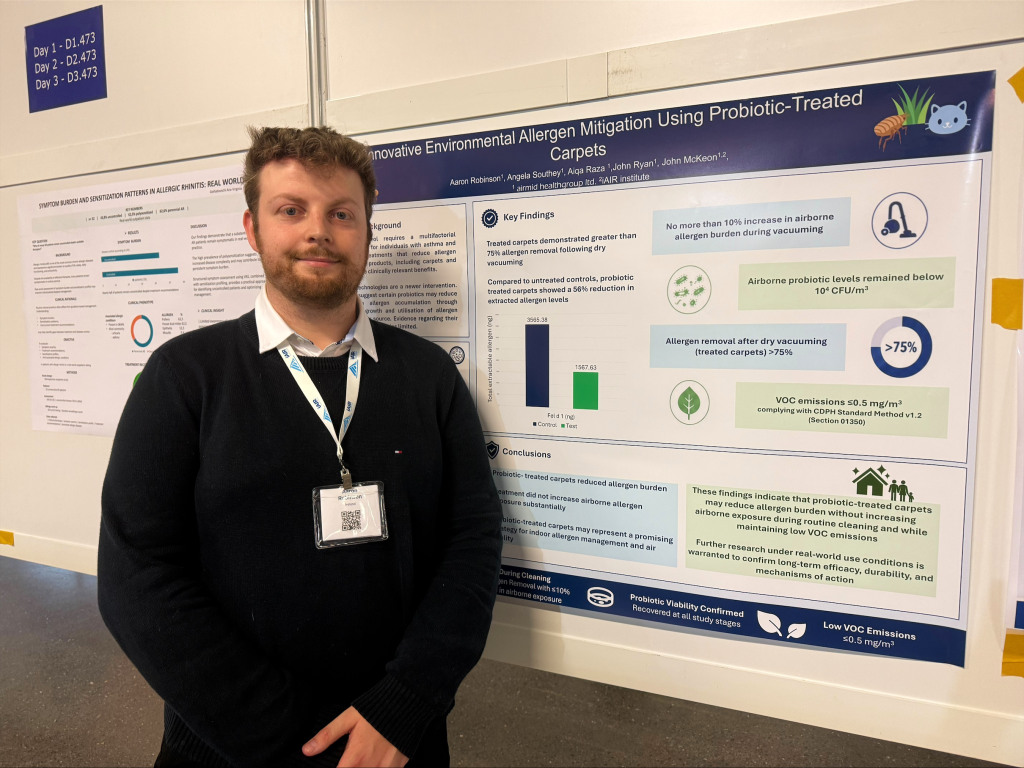
My poster, presented during the thematic session on Environmental Allergy, Climate Change and One Health, focused on the use of probiotic-treated carpet technology as an approach to indoor allergen mitigation. The research, conducted at Airmid’s laboratory, assessed whether probiotic treatment could reduce allergen burden in carpets without increasing airborne allergen levels or compromising safety during routine cleaning.
The findings were encouraging. Probiotic-treated carpets demonstrated greater than 75% allergen removal following dry vacuuming, with a 56% reduction in extractable allergen levels compared to untreated controls. Importantly, airborne probiotic levels remained below 10⁴ CFU/m³ throughout testing and VOC emissions stayed at or below 0.5 mg/m³, in compliance with CDPH Standard Method v1.2. These results are meaningful for anyone working in the field of indoor allergen testing and environmental allergen management.
The response from delegates was genuinely positive. A number of attendees described the probiotic-based approach as a novel and promising direction for improving indoor environmental health, and the session chairs expressed interest in the methodology and in the next phases of testing. That kind of engagement from peers is always encouraging.
Connecting with the Broader Field: Dust Mite Allergens and Emerging Research Themes
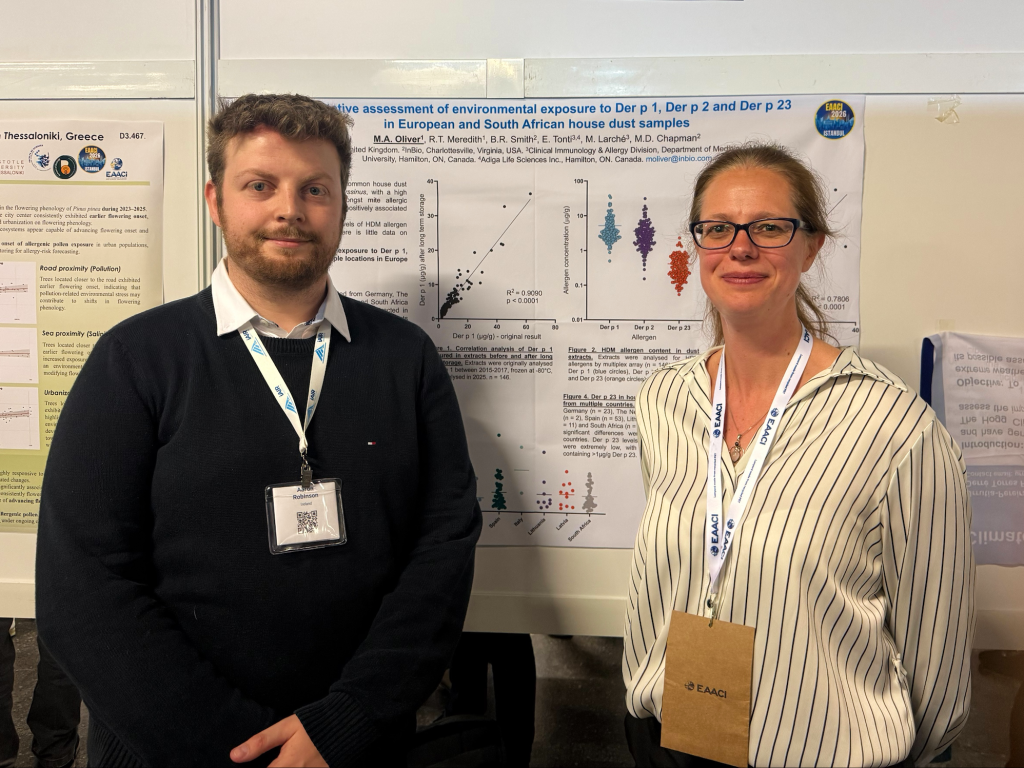
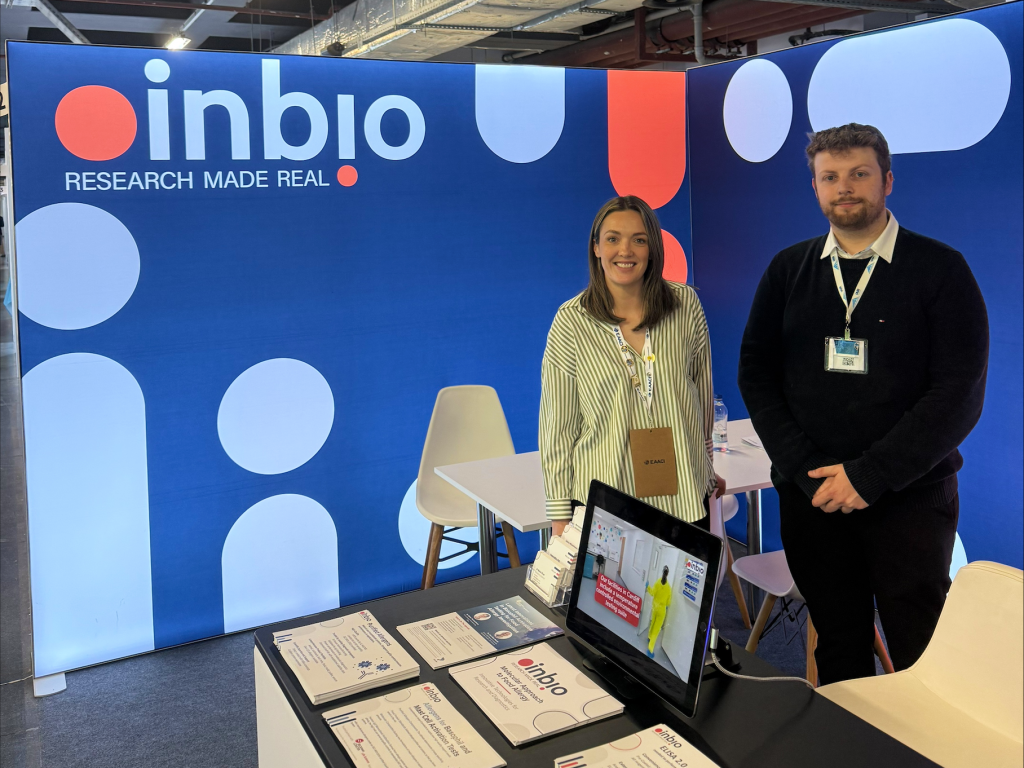
One of the highlights of the congress for me was meeting Maria Oliver from InBio, who was also presenting in the same poster session. Her work on the comparative assessment of house dust mite allergen exposure across European and South African dust samples provided a valuable perspective on how Der p 1, Der p 2, and Der p 23 allergen concentrations vary across geographies and under different storage conditions. Given Airmid’s work in this space, there was a great deal of common ground to explore, and the conversation gave me a clearer picture of current developments in dust mite allergen research internationally.
Key Conference Themes Relevant to Indoor Allergen Testing
Beyond the poster sessions, several sessions stood out for their relevance to the work we do at Airmid. There was strong programme focus on the microbiome and its relationship to allergic sensitisation, on the emerging role of microplastics in modulating allergic disease, and on the intersection of climate change and environmental allergen exposure. These are areas where rigorous indoor allergen testing and environmental verification methods will play an increasingly important role as research in this field matures.
Partnerships, Suppliers, and the Path Ahead
The congress also provided a useful setting for meetings with established suppliers, including Stallergenes Greer and InBio, as well as conversations with potential new collaboration partners. Strengthening these relationships and identifying new opportunities for research and commercial development is an important part of what we do, and EAACI is one of the best environments for that kind of exchange.
Overall, EAACI 2026 was a valuable and stimulating experience. It reinforced the relevance of Airmid’s work in indoor allergen testing and environmental verification, and highlighted the appetite across the research community for scientifically robust approaches to reducing allergen burden in the built environment. I am looking forward to applying the insights from Istanbul to the next phases of our research.
Related Tests and Services at Airmid
ISO/IEC 17025 Accredited Allergen Laboratory Services
Purpose-Built Bioaerosol Chambers for Infectious Aerosols & Airborne Pathogen Testing
Surface and Aerobiology Testing Services
Related Blogs
Measuring What Matters: Aerobiology and Indoor Environmental Quality Testing
Shaping Global Standards for Allergen Removal: iAIR Group at IEC Milan 2025
Inside Airmid’s State-of-the-Art Aerobiology Test Chambers